
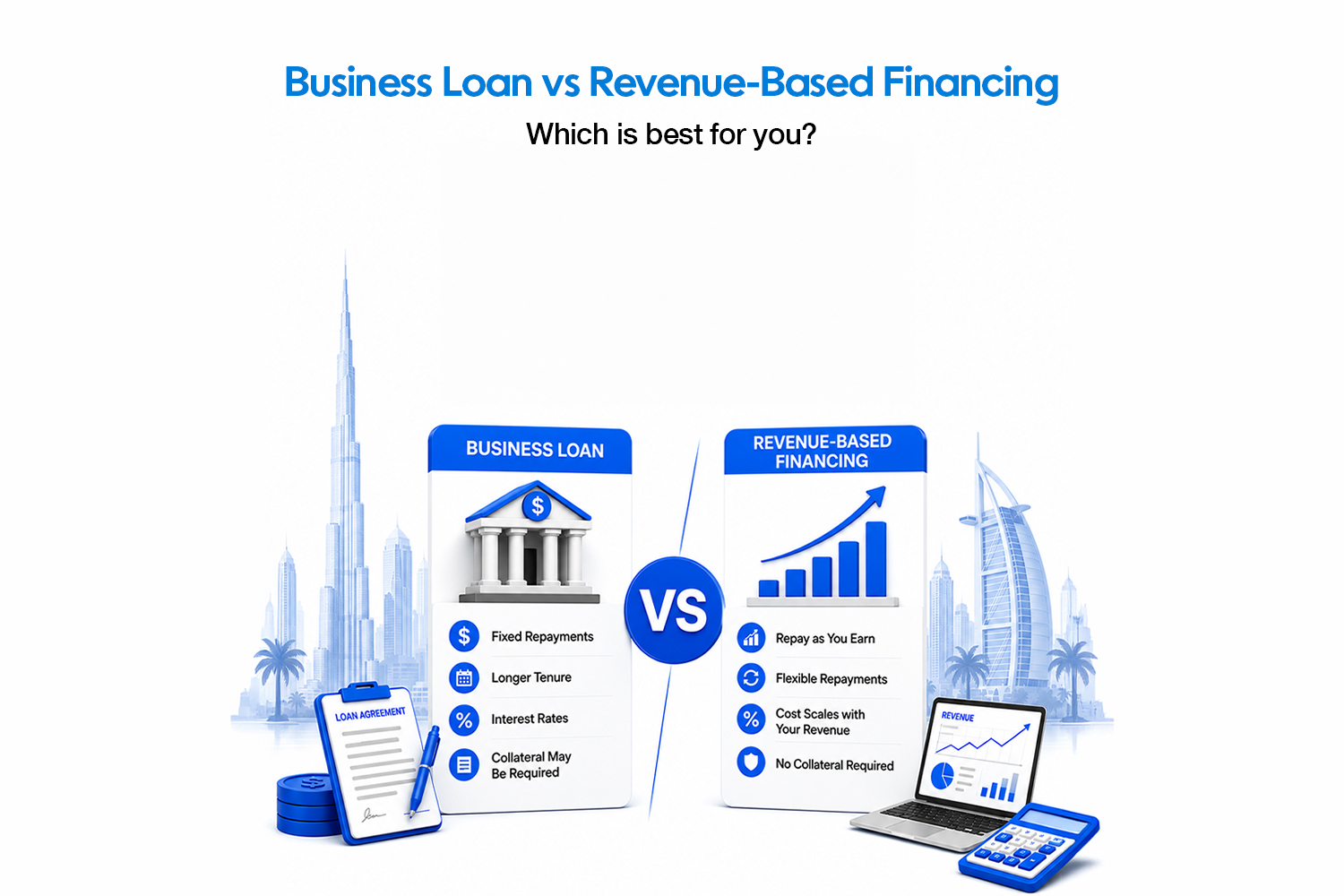
Access to the right funding can be the difference between maintaining steady growth and missing valuable business opportunities. Whether you’re expanding operations, purchasing inventory, hiring employees, or investing in marketing, choosing the right financing option is essential for long-term success. For many businesses in the UAE, the traditional business loan has been the default choice for decades. However, as industries evolve and business models become more dynamic, alternative funding solutions such as Revenue Based Financing UAE are becoming increasingly popular. Both financing options offer access to capital, but they differ significantly in eligibility, repayment structure, flexibility, and suitability for different business models. Understanding these differences will help you choose the solution that best aligns with your business goals.
Understanding SME Business Loans
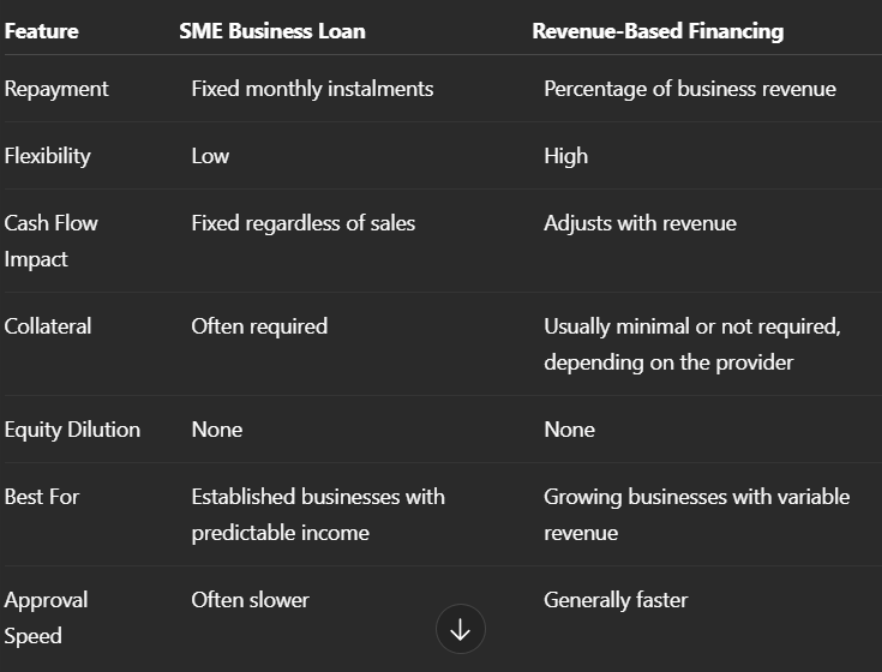
An SME Loan UAE is a traditional financing product offered by banks and financial institutions. Businesses borrow a fixed amount and repay it over an agreed period through fixed monthly instalments, usually with interest.
Business loans are commonly used for:
- Business expansion
- Equipment purchases
- Office renovations
- Fleet acquisition
- Long-term investments
- Operational funding
Many lenders require businesses to demonstrate strong financial history, healthy cash flow, and repayment capability before approving a loan.
Advantages of SME Loans
Predictable Repayment Schedule
Fixed monthly repayments make budgeting easier for businesses with stable and predictable cash flow.
Larger Loan Amounts
Traditional lenders often provide higher funding amounts for businesses with established financial records.
Suitable for Long-Term Investments
Business loans are ideal for purchasing machinery, commercial property, or other long-term assets.
Established Financing Option
Banks remain a preferred choice for businesses with strong credit profiles and long operating histories.
Challenges of Traditional Business Loans
While business loans remain valuable, they also present several challenges.
- Lengthy approval processes
- Strict documentation requirements
- Fixed repayment obligations regardless of revenue
- Collateral requirements in many cases
- Limited flexibility during slower business periods
For businesses with fluctuating income, fixed repayments can place significant pressure on cash flow.
What Is Revenue-Based Financing?
Revenue Based Financing UAE is an alternative funding solution where businesses receive capital based on their current or projected revenue.
Instead of fixed monthly instalments, repayments are linked to a percentage of future revenue.
This means:
- Higher repayments during strong sales periods
- Lower repayments when revenue slows
- Better alignment between funding and business performance
Revenue-Based Financing is particularly attractive for businesses experiencing rapid growth or seasonal sales fluctuations.
Benefits of Revenue-Based Financing
Flexible Repayment
Repayments adjust according to business revenue, helping businesses manage cash flow more effectively.
No Equity Dilution
Unlike equity investment, businesses retain complete ownership and decision-making control.
Faster Access to Funding
Compared to many traditional lending processes, Revenue-Based Financing often provides quicker approvals and faster access to capital.
Supports Business Growth
Funding can be used for:
- Inventory purchases
- Marketing campaigns
- Hiring
- Technology upgrades
- Product development
- Market expansion
Ideal for High-Growth Businesses
Businesses with recurring or growing revenue often benefit from financing that scales alongside their performance.
Business Loan vs Revenue-Based Financing
Which Option Is Best for Your Business?
The answer depends on your business model, financial position, and growth objectives.
Choose an SME Loan if:
- Your business has stable cash flow.
- You need financing for long-term assets or infrastructure.
- You are comfortable with fixed monthly repayments.
- You meet traditional lending requirements.
Choose Revenue-Based Financing if:
- Your revenue fluctuates seasonally.
- You operate an ecommerce, SaaS, D2C, or subscription-based business.
- You want repayments that align with business performance.
- You need funding quickly to seize growth opportunities.
- You prefer flexible financing without giving up equity.
Why More UAE SMEs Are Choosing Flexible Financing
The UAE’s business landscape is changing rapidly. SMEs are expanding into ecommerce, entering new GCC markets, investing in digital transformation, and responding to evolving customer expectations.
These businesses often require funding that adapts to growth rather than restricting it.
Flexible financing solutions allow companies to:
- Maintain healthier cash flow
- Invest confidently in expansion
- Manage seasonal demand
- Improve working capital
- Respond quickly to market opportunities
This explains why Revenue-Based Financing is becoming an increasingly attractive alternative to conventional business loans.
How Fincobox Supports UAE Businesses
Every business has different financing needs, and selecting the right funding solution should depend on your operational model and growth strategy not a one-size-fits-all product.
Fincobox helps UAE businesses access flexible financing solutions tailored to their unique requirements. Whether you’re looking for growth capital through Revenue-Based Financing or need support to strengthen working capital and improve cash flow, Fincobox offers transparent, technology-driven financing solutions designed for modern businesses.
By simplifying access to capital and reducing financial barriers, Fincobox enables businesses to focus on innovation, expansion, and sustainable growth.
Final Thoughts
There is no universal answer when comparing traditional business loans and Revenue-Based Financing. The right solution depends on your business goals, cash flow patterns, and financing requirements. Traditional SME loans remain a strong choice for businesses with predictable income and long-term investment plans. However, for companies operating in fast-moving industries where revenue can fluctuate, Revenue-Based Financing provides greater flexibility and better alignment with business performance. Understanding these differences allows business owners to make informed financial decisions that support long-term success. With the right financing partner, such as Fincobox, UAE businesses can access capital that not only meets today’s needs but also supports tomorrow’s growth opportunities.
Frequently Asked Questions (FAQs)
1. What is the difference between an SME loan and Revenue-Based Financing?
An SME loan involves borrowing a fixed amount with scheduled monthly repayments, while Revenue-Based Financing provides funding that is repaid as a percentage of future business revenue, offering greater flexibility.
2. Which businesses are best suited for Revenue-Based Financing?
Revenue-Based Financing is ideal for ecommerce businesses, SaaS companies, D2C brands, subscription-based businesses, and SMEs with recurring or variable revenue.
3. Are SME loans better than Revenue-Based Financing?
Neither option is universally better. SME loans are suitable for stable businesses making long-term investments, while Revenue-Based Financing is often better for businesses seeking flexible repayments that align with sales performance.
4. Does Revenue-Based Financing require giving up ownership?
No. Revenue-Based Financing is a non-dilutive funding option, allowing business owners to access capital without giving up equity or control of their company.
5. How does Fincobox help UAE businesses choose the right financing solution?
Fincobox works with businesses to understand their revenue model, cash flow, and growth objectives, helping them access financing solutions that improve liquidity, support expansion, and strengthen long-term financial resilience.
Leave a Reply