
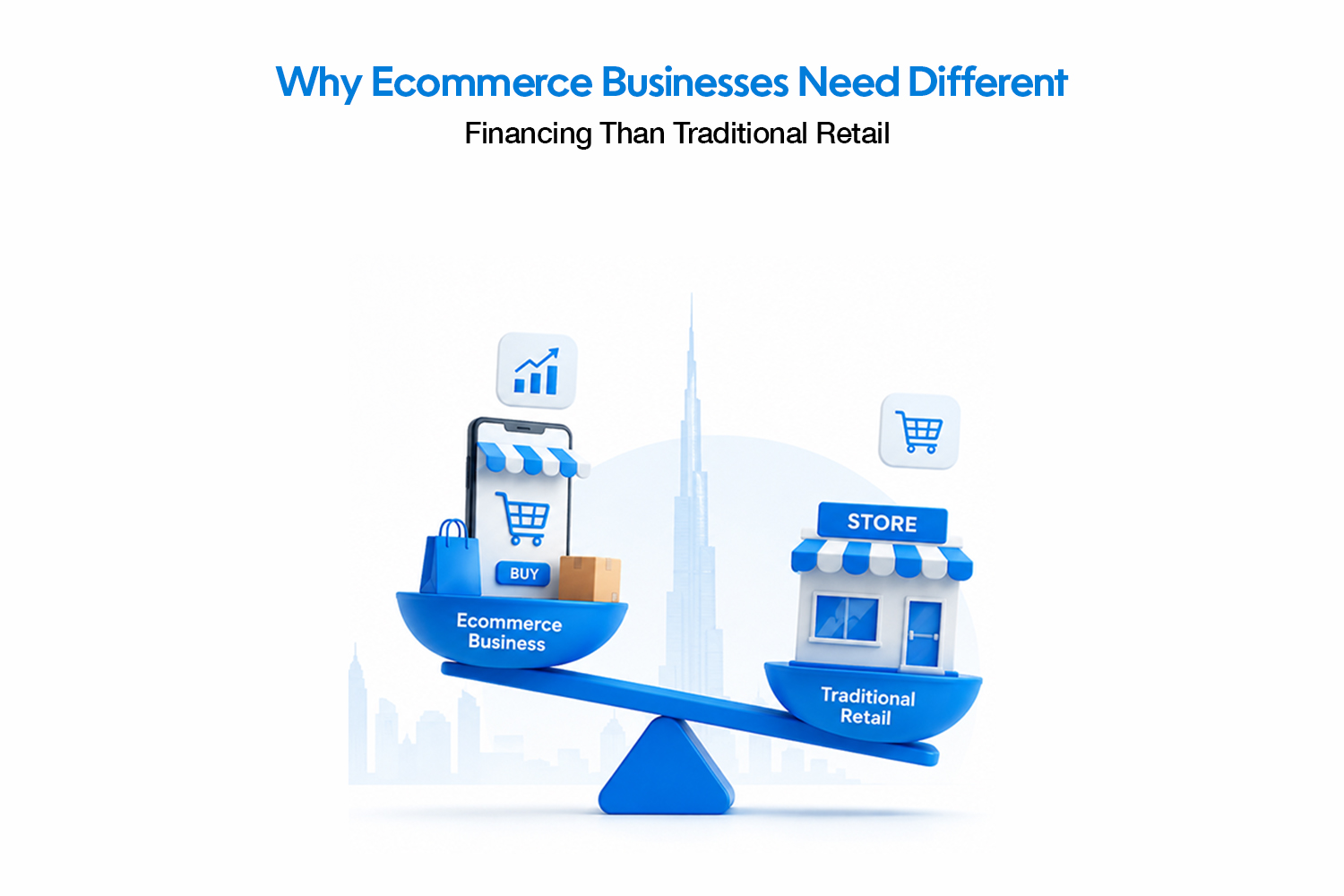
The ecommerce industry in the UAE has experienced remarkable growth over the past few years. Driven by increasing internet penetration, mobile commerce, digital payments, and changing consumer behavior, thousands of businesses now sell through platforms like Shopify, Amazon UAE, Noon, and their own online stores.
While ecommerce and traditional retail both aim to sell products, the way they operate is fundamentally different. Their revenue cycles, customer acquisition strategies, inventory management, and payment timelines require a completely different approach to financing.
Traditional business loans are often designed for businesses with predictable cash flow and physical assets. Ecommerce businesses, on the other hand, need financing solutions that are flexible, fast, and aligned with their growth cycles.
This is why ecommerce business financing has become increasingly important for online businesses looking to scale efficiently in the UAE.
Why Ecommerce Businesses Have Different Financial Needs
Unlike brick-and-mortar retailers, ecommerce businesses operate in a highly dynamic environment where demand, marketing costs, and inventory requirements change rapidly.
Some of the unique financial challenges include:
- High upfront inventory purchases
- Rising digital advertising costs
- Marketplace payment delays
- Seasonal sales fluctuations
- Cross-border shipping expenses
- Frequent product launches
These factors create irregular cash flow patterns that require more flexible funding solutions than traditional retail financing.
Marketplace Payment Delays Impact Cash Flow
Many ecommerce businesses sell through online marketplaces such as Amazon UAE and Noon. Although orders are fulfilled daily, payments are often released after scheduled settlement cycles rather than immediately. This means businesses may generate significant sales while waiting days or even weeks to receive their revenue.
During this period, they still need to:
- Restock inventory
- Pay suppliers
- Cover warehouse expenses
- Manage shipping costs
- Invest in marketing campaigns
Without adequate working capital in the UAE, these delays can restrict business growth despite strong sales performance.
Inventory Requires Continuous Investment
Inventory is one of the largest expenses for ecommerce businesses.
Unlike traditional retailers that may replenish stock based on local demand, ecommerce businesses often purchase inventory in larger quantities to reduce shipping costs and prepare for sales campaigns.
Events such as Ramadan, White Friday, Eid promotions, and year-end shopping seasons require businesses to invest heavily in inventory well before revenue is generated.
Without sufficient financing, businesses may miss valuable sales opportunities simply because they cannot afford to stock enough products.
Customer Acquisition Costs Continue to Rise
Today’s ecommerce businesses rely heavily on paid marketing.
Advertising platforms such as Google Ads, Meta Ads, TikTok, Snapchat, and influencer marketing require businesses to spend money before generating sales.
The challenge is that advertising expenses are paid immediately, while revenue may only arrive after product delivery and marketplace settlement.
This creates a gap between investment and cash recovery that many growing businesses struggle to manage.
Growth Requires Constant Reinvestment
Unlike many traditional retailers, ecommerce businesses are expected to scale quickly.
Expansion often involves:
- Launching new products
- Entering new marketplaces
- Expanding into GCC countries
- Increasing warehouse capacity
- Hiring customer support teams
- Investing in automation and technology
Each stage of growth requires additional capital.
Without flexible financing, rapid expansion can place significant pressure on cash flow.
Why Revenue-Based Financing Works Better for Ecommerce Businesses
One financing model that has gained popularity among online businesses is Revenue Based Financing Ecommerce.
Unlike conventional loans with fixed monthly repayments, revenue-based financing allows repayments to align with business revenue.
This makes it particularly suitable for ecommerce businesses whose monthly sales fluctuate due to:
- Seasonal demand
- Marketing campaigns
- Promotional events
- Marketplace performance
- Consumer buying behaviour
Some of the key benefits include:
- Flexible repayment structure
- Faster access to capital
- No equity dilution
- Funding that grows alongside the business
- Better cash flow management during expansion
For ecommerce businesses focused on growth, this flexibility provides a significant competitive advantage.
The Importance of Working Capital for Ecommerce Growth
Healthy Working Capital UAE allows ecommerce businesses to operate without interruption.
Adequate working capital helps businesses:
- Purchase inventory before demand increases
- Launch new product collections
- Pay suppliers on time
- Increase advertising budgets
- Improve customer experience
- Manage returns and refunds
- Expand into new markets
Businesses with strong working capital are able to respond quickly to market opportunities while maintaining financial stability.
Choosing the Right Ecommerce Financing Partner
Not all financing solutions are designed for online businesses.
When evaluating financing options, ecommerce brands should look for providers that understand:
- Marketplace payment cycles
- Inventory planning
- Digital marketing investment
- Revenue fluctuations
- Seasonal sales trends
- Business scalability
Flexible financing that adapts to ecommerce operations enables businesses to grow with greater confidence.
How Fincobox Supports Ecommerce Businesses
Growing ecommerce brands require financing solutions that move at the same speed as their business.
Fincobox helps UAE ecommerce businesses access flexible financing solutions that improve cash flow, strengthen working capital, and support business growth without disrupting daily operations.
Whether a business is preparing for a major sales season, investing in inventory, expanding into new marketplaces, or managing delayed marketplace payouts, Fincobox provides financing solutions designed around the unique needs of ecommerce companies.
With funding options tailored to modern businesses, ecommerce brands can continue scaling while maintaining healthy financial flexibility.
Final Thoughts
Ecommerce businesses operate in a completely different financial environment than traditional retail stores.
From marketplace payment delays and rising customer acquisition costs to inventory planning and seasonal demand, online businesses require financing solutions that are agile, scalable, and aligned with their growth journey.
Investing in the right Ecommerce Business Financing, maintaining sufficient Working Capital UAE, and exploring flexible options such as Revenue Based Financing Ecommerce can help businesses overcome cash flow challenges while accelerating sustainable growth.
With trusted financing partners like Fincobox, ecommerce businesses can access the capital they need to seize new opportunities, improve liquidity, and build long-term success in the competitive UAE digital marketplace.
Frequently Asked Questions (FAQs)
1. Why do ecommerce businesses need different financing than traditional retailers?
Ecommerce businesses face unique challenges such as delayed marketplace payouts, high digital marketing costs, seasonal demand, and inventory investments. These factors require more flexible financing solutions than traditional retail businesses.
2. What is Ecommerce Business Financing?
Ecommerce business financing refers to funding solutions specifically designed for online businesses to support inventory purchases, marketing campaigns, operational expenses, and business expansion while maintaining healthy cash flow.
3. What is Revenue-Based Financing for ecommerce businesses?
Revenue-Based Financing allows ecommerce businesses to access capital with repayments linked to future revenue rather than fixed monthly instalments. This provides greater flexibility during periods of fluctuating sales.
4. Why is working capital important for ecommerce businesses?
Working capital helps ecommerce businesses purchase inventory, manage supplier payments, fund advertising campaigns, handle seasonal demand, and maintain smooth day-to-day operations without financial disruptions.
5. How does Fincobox help ecommerce businesses in the UAE?
Fincobox offers flexible financing solutions tailored to the needs of ecommerce businesses, including working capital support and revenue-based financing. These solutions help businesses improve cash flow, invest in growth, manage marketplace payment delays, and scale confidently across the UAE and GCC.
Leave a Reply